Sustainability
We have an important role to play in creating a more sustainable and inclusive future.


Lloyds Banking Group incorporates many household names.
Our report provides an update on how we are Helping Britain Prosper in a way that delivers long-term profit and returns.

We put you first, so you can put our customers first.
Our report provides an update on how we are Helping Britain Prosper in a way that delivers long-term profit and returns.

Secondary Navigation 'Sustainability policies and information' links to /content/gca/en-gb/home/sustainability/esg-policies-downloads
Disclosures relating to our strategic, financial, operational, environmental and social performance.

Latest and archived results for Lloyds Banking Group and its main subsidiaries.
See all the key dates in the financial year.

Higher, more sustainable returns as we continue to Help Britain Prosper.

Information and key documents for the wide range of securities issued by Lloyds Banking Group and its entities.
Lloyds Banking Group has been recognised as the United Kingdom's Best Bank in the Euromoney Awards for Excellence 2026.
What’s next for the UK housing market in 2026? Outlook on interest and mortgage rates, first‑time buyers, rental reform and regional trends from Lloyds Banking Group.
Secondary Navigation 'Group news' links to /content/gca/en-gb/home/insights.f0-5.html#articleTop
With hubs across the UK, there's a place for you.
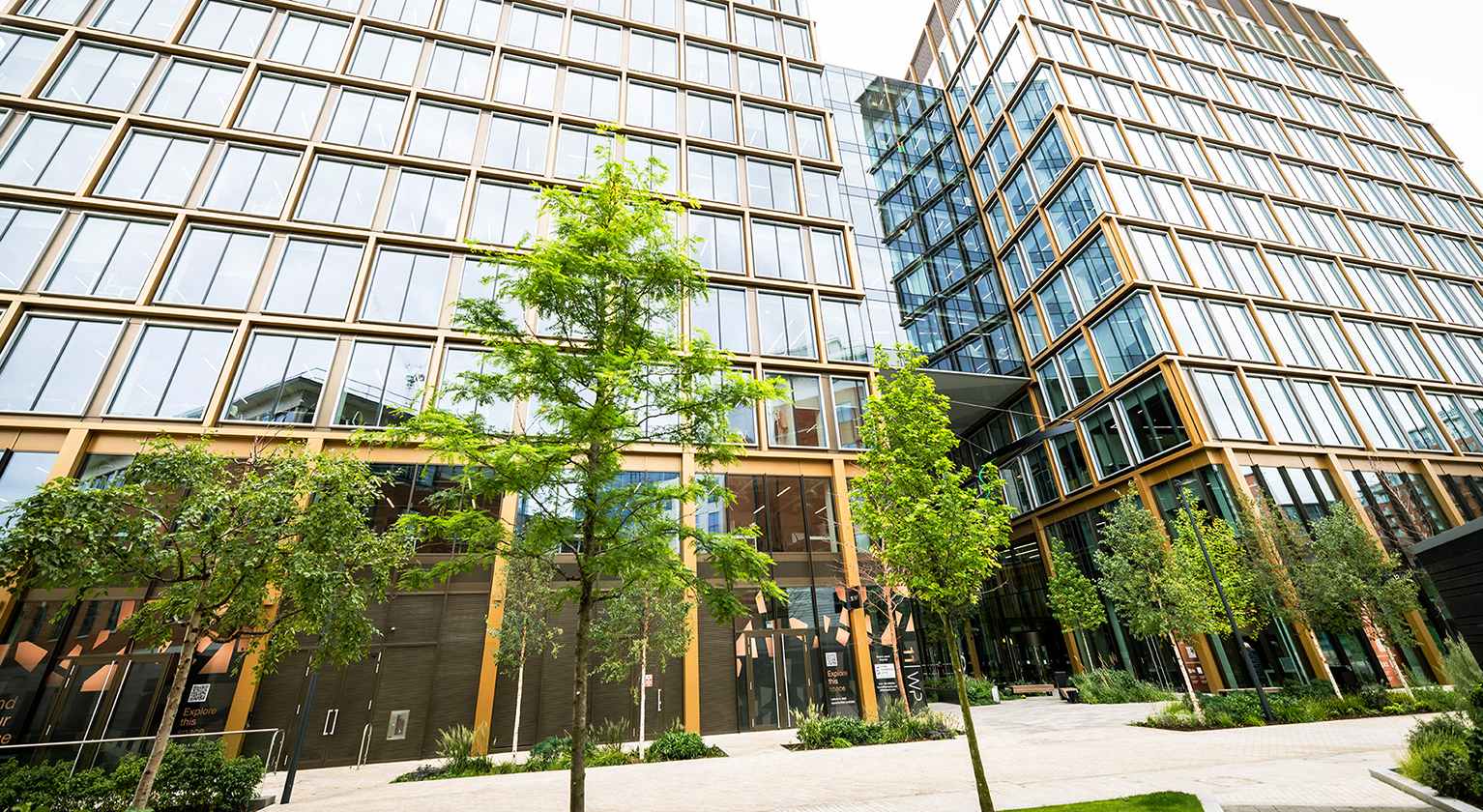
We're searching for the best talent to join us in Leeds.

Join us as we explore new ideas and technologies to reshape the world of finance.
Secondary Navigation 'About applying' links to /content/gca/en-gb/home/careers/about-applying
Secondary Navigation 'Early careers' links to https://www.lloydsbankinggrouptalent.com/
Secondary Navigation 'Search jobs' links to /content/gca/en-gb/home/careers/job-search
We have an important role to play in creating a more sustainable and inclusive future.
Lloyds Banking Group incorporates many household names.
Our report provides an update on how we are Helping Britain Prosper in a way that delivers long-term profit and returns.
We put you first, so you can put our customers first.
Our report provides an update on how we are Helping Britain Prosper in a way that delivers long-term profit and returns.
Disclosures relating to our strategic, financial, operational, environmental and social performance.
Latest and archived results for Lloyds Banking Group and its main subsidiaries.
See all the key dates in the financial year.
Higher, more sustainable returns as we continue to Help Britain Prosper.
Information and key documents for the wide range of securities issued by Lloyds Banking Group and its entities.
Lloyds Banking Group has been recognised as the United Kingdom's Best Bank in the Euromoney Awards for Excellence 2026.
What’s next for the UK housing market in 2026? Outlook on interest and mortgage rates, first‑time buyers, rental reform and regional trends from Lloyds Banking Group.
With hubs across the UK, there's a place for you.
We're searching for the best talent to join us in Leeds.
Join us as we explore new ideas and technologies to reshape the world of finance.
Module 1
Modern slavery is the illicit trade in human beings who are turned into commodities to be bought, sold or exploited.
Victims might be trapped working in factories, car washes, fields, hotels or nail bars, often facing violence, threats or inescapable debt.
Modern slavery is a global crisis. An estimated 50 million people are trapped in modern slavery today.
Many are exploited through forced labour across global supply chains that produce the everyday items we all rely on, for instance clothing, electronics and our food.
But this isn't just a distant issue. Modern slavery is present here in the UK, with forced labour being the most common form. It hides in plain sight, on construction sites, in warehouses, in cleaning services and through complex subcontracting chains.
We cannot build an inclusive society while exploitation persists. As one of the UK’s largest financial services providers, we have an important role to play in combating modern slavery throughout the Group to reduce the associated risks to the Group and support communities, in line with our purpose of Helping Britain Prosper.
Within sourcing and supplier management, we need to ensure that the suppliers we procure from are taking steps to mitigate forced labour and labour abuse in their supply chains.
Modern slavery is a global crisis affecting an estimated 50 million people. It hides in plain sight – on construction sites, in warehouses, in cleaning services, and in complex sub-contracting chains.
In this module, you'll step into the shoes of a supplier manager visiting a live construction site in Leeds. Through a series of realistic scenarios, you'll learn how to identify potential signs of modern slavery and make ethical decisions that protect vulnerable workers.
The UK construction industry has been identified as a high-risk sector for labour exploitation, particularly through complex subcontracting chains and third-party labour agencies. In recent years, investigations have uncovered cases where workers were underpaid, lacked proper documentation, or were charged illegal recruitment fees – practices that can amount to modern slavery.
Every decision you make in this module reflects real-world challenges – and has real-world consequences. Let’s begin.
You are visiting a couple of key sites to check on progress and ensure suppliers and subcontractors are meeting their ethical obligations.
Whether it's a construction project site, or a courier service warehouse, your focus should be on safety, equity and integrity.
You’re a Supplier Manager visiting a key construction project.
You’re here to check on progress, but also to ensure suppliers and subcontractors are meeting their ethical obligations.
It's a typical Monday morning. The site's already active. You can see crew moving around.
Most of the workers are in full gear, branded uniforms, hard hats and identity badges.
As you walk through the site, you notice something concerning. A few workers don't have visible ID or branded uniforms. One avoids eye contact and doesn't speak English.
What do you do?
On entering the site, you notice some workers don’t have visible ID or branded uniforms. One avoids eye contact and doesn’t speak English. What do you do?
You should ask the site supervisor if everyone on site has provided CSCS (Construction Skills Certification Scheme) cards, which is a certification that proves a worker has the necessary training and qualifications to work safely on a construction site.
Unidentified or undocumented workers who don’t have CSCS cards or may be using a fake card are a key red flag for labour exploitation.
The site manager walks through the construction zone to check the progress against the actual plan.
He meets with the team to discuss the situation. His voice carries a weight of disappointment as he explains that persistent delays are putting increasing pressure on the project. The timeline is slipping and each passing day feels like a ticking clock.
To avoid further setbacks, he's considering hiring additional workers from a third party labour agency he's worked with before.
What do you do?
You bump into the site manager looking stressed. He says delays are pushing them to hire from a third-party labour agency he’s used before. Should you be concerned?
Yes, you should ask to understand more about the agency’s approach to responsible recruitment and due diligence processes.
Labour providers must be vetted, and knowing how workers are recruited helps to ensure fair wages and working conditions.
Fast hiring leads to a lack of transparency in recruitment practices and heightens the risk of workers facing exploitation, especially if the agency isn’t monitoring working hours, wages or health and safety.
As you step into the bustling courier services office, you notice the constant movement of workers sorting packages and preparing for their next deliveries.
During a short break, some workers settle down to rest and chat, while others continue working. A few sit alone, choosing not to join the others. You also overhear one of the workers quietly mentioned that they had to pay fees to get this job nearby.
You also notice one worker who seems especially fatigued from long hours and the pressure of many more deliveries to complete.
What do you do?
In the break room at lunchtime, one of the other workers appears fatigued and doesn’t join the others. You overhear someone mention paying fees to come and work here. What should you do?
You should raise your concern with the site manager if you feel comfortable, or report it through an appropriate speak-up or reporting channel.
Escalating concerns is critical. The mention of workers paying fees to secure employment is a significant red flag and may indicate debt bondage, a form of modern slavery prohibited under international law. Workers in these situations may be vulnerable and unable to leave their employment freely.
By raising concerns promptly and following the correct reporting routes, you help ensure that potential risks are investigated and that vulnerable individuals are protected.
Every decision you make has an impact on real people. Ethical sourcing is not just a process to follow, it's about protecting individuals who may be vulnerable or unable to speak up for themselves.
In this scenario, the signs of modern slavery were not immediately obvious and could be easy to overlook in day-to-day interactions. However, these signals can point to more serious risks. Modern slavery can exist in plain sight, particularly in complex supply chains where visibility is limited.
Small actions, whether you choose to question, investigate, or escalate a concern, can make a meaningful difference.
In this module, you explored how modern slavery risks can appear in real-world supply chain scenarios.
You saw that:
As a supplier, you play a key role in identifying and addressing these risks within your own organisation and across your supply chain. Being aware and taking action when needed helps protect individuals and supports more ethical supply chains.
In the next module, build your knowledge of the Modern Slavery Act and the requirements of a modern slavery statement.