Sustainability
We have an important role to play in creating a more sustainable and inclusive future.

We have an important role to play in creating a more sustainable and inclusive future.

Our report provides an update on how we are Helping Britain Prosper in a way that delivers long-term profit and returns.

We put you first, so you can put our customers first.
Our report provides an update on how we are Helping Britain Prosper in a way that delivers long-term profit and returns.

Disclosures relating to our strategic, financial, operational, environmental and social performance.

See all the key dates in the financial year.

Higher, more sustainable returns as we continue to Help Britain Prosper.
We've ranked in the top 10 employers for both graduates and apprenticeships in The Times Top 100.
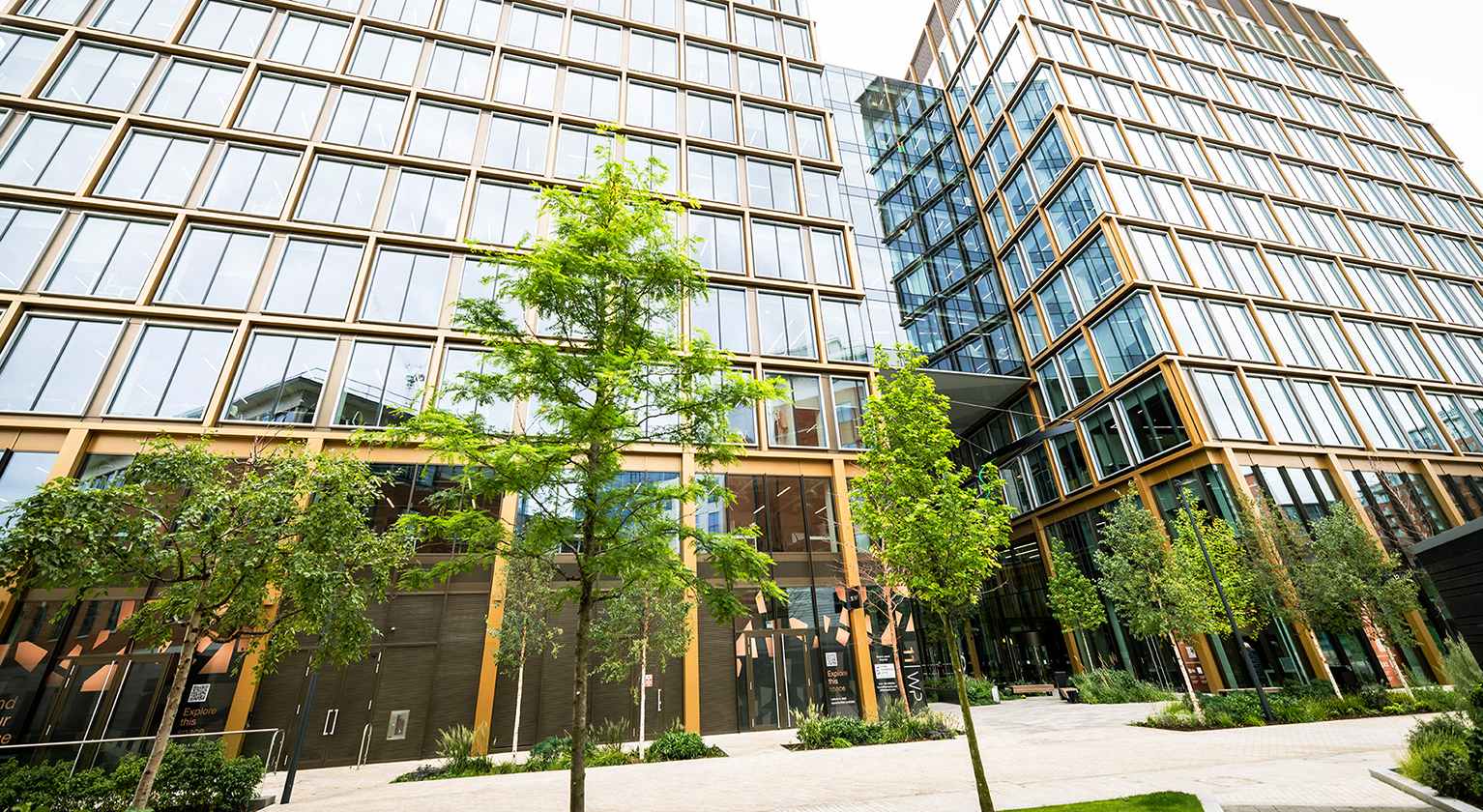
We're searching for the best talent to join us in Leeds.

Join us as we explore new ideas and technologies to reshape the world of finance.
We have an important role to play in creating a more sustainable and inclusive future.
Our report provides an update on how we are Helping Britain Prosper in a way that delivers long-term profit and returns.
We put you first, so you can put our customers first.
Our report provides an update on how we are Helping Britain Prosper in a way that delivers long-term profit and returns.
Disclosures relating to our strategic, financial, operational, environmental and social performance.
See all the key dates in the financial year.
Higher, more sustainable returns as we continue to Help Britain Prosper.
We've ranked in the top 10 employers for both graduates and apprenticeships in The Times Top 100.
We're searching for the best talent to join us in Leeds.
Join us as we explore new ideas and technologies to reshape the world of finance.

Business confidence fell in June by three points to 44%, below the 12-month average of 47%, according to the Lloyds Business Barometer. The business confidence figure is an average of economic optimism and trading outlook.
Domestic firms reported lower confidence in both their economic optimism and trading outlook, citing cost pressures (up 2 points) and global uncertainty (up 7 points) as factors affecting economic optimism. Firms that trade internationally were more confident in both their economic optimism and trading outlook.
Optimism in the wider economy fell four points to 31% in June, below the 12-month average of 38%. In June, 55% said they were optimistic (no change from May), while those who felt more pessimistic increased by four points to 24%. The main factors cited by firms remained consistent with previous months, with rising inflation and cost pressures up three points, and continuing global uncertainty up four points.
Businesses’ own trading outlook decreased by two points in June to 56%, compared to a 12-month average of 57%. Sixty-four percent of firms (down two points vs May) expect stronger output over the year ahead, while the share expecting weaker activity remained unchanged at 8%. Among firms expecting weaker activity, the main factors remained consistent with May and April: economic uncertainty, and continuing cost pressures.
Domestic firms reported lower confidence in both their economic optimism and trading outlook. Their economic optimism fell 21 points to 3%, an 18-month low and significantly below the 12-month average of 20%. This was driven by expected weaker trading activity and higher cost pressures. Their trading outlook fell 11 points to 37%, compared to a 12-month average of 42%. Firms cited cost pressures, global uncertainty, and tighter financial conditions as factors affecting confidence in the wider economy.
By contrast, firms that trade internationally were more confident in both their economic optimism and trading outlook. Their optimism in the wider economy increased eight points to 47%, compared to a 12-month average of 49%. This was driven by stronger customer demand, as well as improved financial conditions. Their positive trading outlook rose five points to 68%, compared to a 12-month average of 65%. This was driven by increased investment plans, improved supply chain conditions and stronger customer demand.
Hiring intentions for the year ahead rose for the first time in three months. The share of firms planning to increase their workforce increased two points to 55%, while those anticipating headcount reductions fell three points to 14%. Firms intending to hire cited the need to meet strengthening demand and expand capacity.
The number of businesses open to investment opportunities dropped three points to 34%, compared to 12-month average of 35%. Most continue to cite training (41%), technology (39%), and AI (31%) as their priority areas.
“While cost pressures and global uncertainty continue to weigh on business confidence, international firms are much more confident with many seeing signs of supply chain disruption easing and strengthening customer demand.
More broadly, we’ve recently seen an uptick in investment towards energy security and efficiency to support long-term resilience. Where firms are hiring, they’re recruiting highly specialist skills to meet strengthening demand and expand capacity.”
Amanda Murphy, CEO, Lloyds Business and Commercial Banking
Business confidence amongst manufacturing firms dropped 10 points to 33%, compared to a 12-month average of 46%. This was driven by a 16 point decrease in economic optimism with firms pointing to global uncertainty, higher costs and tighter financial conditions. Retail firms recorded an eight point drop in confidence to 45%, compared to a 12-month average of 49%. This was mainly driven a 12 point decrease in economic optimism with firms pointing to by global uncertainty, higher costs and tighter financial conditions.
Business confidence amongst construction firms increased two points to 46%, compared to a 12-month average of 47%. Services firms remained stable for the second month at 45%, against a 12-month average of 47%.
“The June data shows a more uneven picture across sectors than in May. Manufacturing and Retail both saw significant declines in confidence, with Manufacturing in particular dropping sharply and now sitting below its 12-month average likely reflecting a mix of softer demand and ongoing cost challenges. Retail also fell from a strong reading in May, driven by a fall in economic optimism.
By contrast, construction saw a modest improvement in confidence and was the only sector to report stronger expectations for its own trading outlook. Services remain broadly steady, although the underlying picture is mixed, with stable demand offset by continued cost pressures.
Overall, while some sectors are holding up, the data suggests that uncertainty is still feeding through unevenly and weighing more heavily on parts of the economy than others.”
Hann-Ju Ho, Senior Economist, Lloyds Commercial
Business confidence was highest in the East Midlands and London, both posting monthly increases of two points and eight points respectively. Despite a 15-point decline, the North East ranked third at 54%, maintaining its position among the more confident regions. Sentiment fell most in the East of England and the West Midlands, pointing to renewed softness in parts of the country.
|
RANK |
Region/Nation |
June 2026 |
Change vs. May |
rank change vs. may |
|---|---|---|---|---|
|
RANK 1 |
Region/Nation East Midlands |
June 2026 56% |
Change vs. May +2pp |
rank change vs. may +2 |
|
RANK 2 |
Region/Nation London |
June 2026 55% |
Change vs. May +8pp |
rank change vs. may +5 |
|
RANK 3 |
Region/Nation North East |
June 2026 54% |
Change vs. May -15pp |
rank change vs. may -2 |
|
RANK 4 |
Region/Nation Northern Ireland |
June 2026 49% |
Change vs. May +2pp |
rank change vs. may +3 |
|
RANK 5 |
Region/Nation Scotland |
June 2026 48% |
Change vs. May -2pp |
rank change vs. may +1 |
|
RANK 6 |
Region/Nation Yorkshire & Humber |
June 2026 47% |
Change vs. May +5pp |
rank change vs. may +3 |
|
RANK 7 |
Region/Nation South West |
June 2026 44% |
Change vs. May +22pp |
rank change vs. may +5 |
|
RANK 8 |
Region/Nation North West |
June 2026 43% |
Change vs. May -11pp |
rank change vs. may -5 |
|
RANK 9 |
Region/Nation West Midlands |
June 2026 38% |
Change vs. May -24pp |
rank change vs. may -7 |
|
RANK 10 |
Region/Nation South East |
June 2026 35% |
Change vs. May -6pp |
rank change vs. may 0 |
|
RANK 11 |
Region/Nation Wales |
June 2026 32% |
Change vs. May +9pp |
rank change vs. may 0 |
|
RANK 12 |
Region/Nation East of England |
June 2026 23% |
Change vs. May -31pp |
rank change vs. may -9 |