Sustainability
We have an important role to play in creating a more sustainable and inclusive future.

We have an important role to play in creating a more sustainable and inclusive future.

Our report provides an update on how we are Helping Britain Prosper in a way that delivers long-term profit and returns.

We put you first, so you can put our customers first.
Our report provides an update on how we are Helping Britain Prosper in a way that delivers long-term profit and returns.

Disclosures relating to our strategic, financial, operational, environmental and social performance.

See all the key dates in the financial year.

Higher, more sustainable returns as we continue to Help Britain Prosper.
We've ranked in the top 10 employers for both graduates and apprenticeships in The Times Top 100.
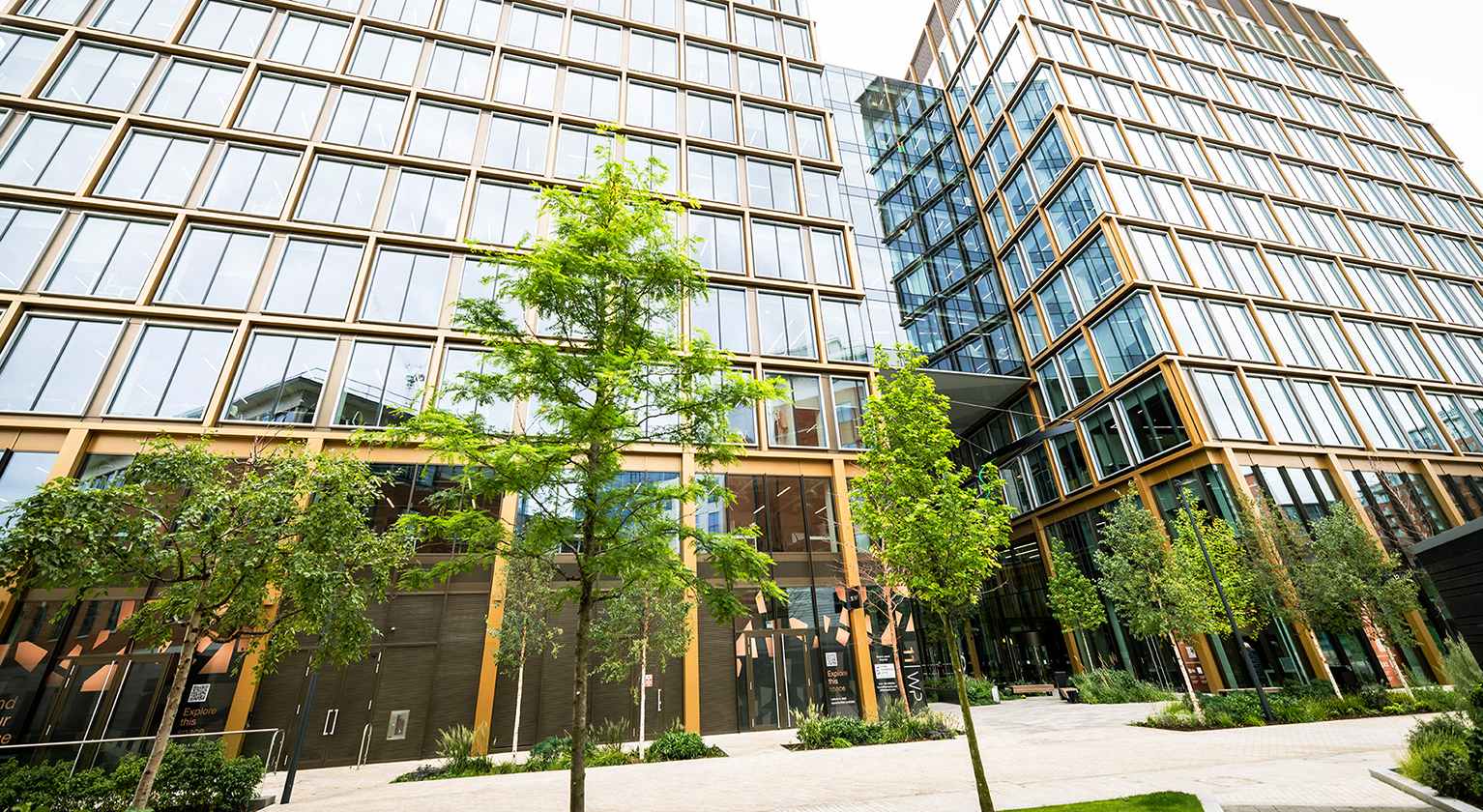
We're searching for the best talent to join us in Leeds.

Join us as we explore new ideas and technologies to reshape the world of finance.
We have an important role to play in creating a more sustainable and inclusive future.
Our report provides an update on how we are Helping Britain Prosper in a way that delivers long-term profit and returns.
We put you first, so you can put our customers first.
Our report provides an update on how we are Helping Britain Prosper in a way that delivers long-term profit and returns.
Disclosures relating to our strategic, financial, operational, environmental and social performance.
See all the key dates in the financial year.
Higher, more sustainable returns as we continue to Help Britain Prosper.
We've ranked in the top 10 employers for both graduates and apprenticeships in The Times Top 100.
We're searching for the best talent to join us in Leeds.
Join us as we explore new ideas and technologies to reshape the world of finance.

Business confidence in the UK hit a four-month high, rising five points to 49% in July, two points higher than the 12-month average of 47%, according to the Lloyds Business Barometer. This was driven by an increase in economic optimism, reflecting the decline in global energy prices, the Bank of England holding interest rates and the announcement of an interim peace agreement in the Middle East at the time of the fieldwork for the survey.
The overall business confidence figure is an average of economic optimism and trading outlook.
Optimism in the wider economy rose 11 points to 42%, compared to a 12-month average of 37%. Of those surveyed, 59% said they were optimistic (up four points from June) in the wider economy, while those who felt pessimistic decreased by seven points to 17%. The main factors cited by firms who felt more positive this month were, stronger customer demand, improving interest rates or financial conditions and better economic news.
Businesses’ own trading outlook remained unchanged at 56% in July, compared to a 12-month average of 57%. Sixty-five percent of firms (up one point from June) expect stronger output over the year ahead, while those expecting weaker activity increased one point to 9%. Among firms expecting stronger activity, the main factors were stronger customer demand, increased investment in capacity or tech and improved supply chain conditions.
Domestic firms reported a 22-point increase in economic optimism to 25%. While International firms saw a more modest rise from 47% to 51%. Both increases were driven by stronger customer demand, improving financial conditions and better economic news.
Trading outlook also increased for domestic firms, up six points to 43%, driven by stronger customer demand, increase investment in technology and improved supply chain conditions. However international firms saw a decline of three points to 62%, driven by higher cost pressures, economic uncertainty and staffing shortages.
Smaller firms with turnover below £1 million reported a strong increase in business confidence, up 11 points to 48%, driven by stronger market demand, improving financial conditions and better economic news.
Amanda Murphy CEO for Lloyds Business and Commercial BankingIt’s encouraging to see business confidence reached its highest level in four months, driven by a significant improvement in economic optimism. While challenges remain, these results suggest many businesses are feeling more optimistic about the opportunities ahead. Businesses have remained remarkably resilient in recent months, with many focusing on investing in their future, improving productivity and making sure they’re well placed to respond as market conditions change. The stronger confidence we're seeing among smaller businesses and firms focused on the domestic market is particularly encouraging, suggesting more businesses are starting to see opportunities for growth and investment.
Business confidence among manufacturing firms rose 14 points to 47%, compared to a 12-month average of 45%. This was driven by stronger customer demand, improving cost pressures and better economic news. Business confidence amongst construction firms increased 10 points to 56%, compared to a 12-month average of 47%. This was driven also by stronger customer demand, improving financial conditions and industry-specific improvements.
Service sector firms saw an increase of four points to 49%, against a 12-month average of 46%. This was driven by, similarly to those in other sectors, stronger customer demand, improving financial conditions and better economic news.
Retail firms remained broadly stable, down two points to 43%, compared to a 12-month average of 46% driven by higher cost pressures, economic uncertainty and capacity constraints.
Hann-Ju Ho Senior Economist, Lloyds CommercialJuly's rise in confidence appears to reflect a more stable global backdrop, with lower energy prices and reduced uncertainty helping to lift firms' view of the wider economy. The improvement was driven primarily by stronger economic optimism, with confidence increasing across a number of sectors, particularly Manufacturing and Construction. This points to firms responding positively to a calmer external environment, while remaining sensitive to geopolitical risks. If global conditions become more uncertain again, sentiment could react, particularly where firms are still managing cost pressures and competitive conditions.
Confidence rose in seven of the UK’s 12 regions and nations, with the North East, Yorkshire & Humber, and the West Midlands all reporting strong increases and leading the rankings. However, sentiment fell in the South West, Scotland, Northern Ireland, and London.
The East of England saw the biggest increase, up 30 points to 53%. Wales and the South East also saw notable improvements.
|
RANK |
Region/Nation |
JULY 2026 |
Change vs. JUNE |
rank change vs. JULY |
|---|---|---|---|---|
|
RANK 1 |
Region/Nation North East |
JULY 2026 75% |
Change vs. JUNE +21pp |
rank change vs. JULY +2 |
|
RANK 2 |
Region/Nation Yorkshire & Humber |
JULY 2026 61% |
Change vs. JUNE +14pp |
rank change vs. JULY +4 |
|
RANK 3 |
Region/Nation West Midlands |
JULY 2026 57% |
Change vs. JUNE +19pp |
rank change vs. JULY +6 |
|
RANK 4 |
Region/Nation East of England |
JULY 2026 53% |
Change vs. JUNE +30pp |
rank change vs. JULY +8 |
|
RANK 5 |
Region/Nation London |
JULY 2026 51% |
Change vs. JUNE -4pp |
rank change vs. JULY -3 |
|
RANK 6 |
Region/Nation South East |
JULY 2026 50% |
Change vs. JUNE +15pp |
rank change vs. JULY +4 |
|
RANK 7 |
Region/Nation North West |
JULY 2026 49% |
Change vs. JUNE +6pp |
rank change vs. JULY +1 |
|
RANK 8 |
Region/Nation East Midlands |
JULY 2026 49% |
Change vs. JUNE -7pp |
rank change vs. JULY -6 |
|
RANK 9 |
Region/Nation Wales |
JULY 2026 44% |
Change vs. JUNE +12pp |
rank change vs. JULY +2 |
|
RANK 10 |
Region/Nation Scotland |
JULY 2026 42% |
Change vs. JUNE -6pp |
rank change vs. JULY -5 |
|
RANK 11 |
Region/Nation South West |
JULY 2026 30% |
Change vs. JUNE -14pp |
rank change vs. JULY -4 |
|
RANK 12 |
Region/Nation Northern Ireland |
JULY 2026 26% |
Change vs. JUNE -23pp |
rank change vs. JULY -8 |